

Not only a place for entertainment or connection, social networks are gradually becoming a place for each individual to build their image, express their lifestyle and affirm their own values. However, hidden behind that sparkling appearance is the invisible pressure from virtual standards, the hidden race to not fall behind. Many young people fall into a state of having to be perfect, having to “keep up with friends” to feel valuable. That invisibly affects their mental health more and more seriously. So how can we identify and master social networks to live true to ourselves?
Caring about mental health, it will be simpler when…
The world is noisy, are young people silent with the “child inside them”?
The Power of Breath and a Healthy Lifestyle on Learning Performance
Social Media Overload
Today’s social media has gradually become a “virtual mirror” that reflects what is considered ideal: a beautiful body, a good job, a glamorous life, luxurious trips. It is worth mentioning that, when these images are repeated, they unintentionally become the standard measure that many young people apply to themselves. According to Statista’s report, on average, a Gen Z person spends more than 3 hours a day on platforms such as TikTok, Instagram, Facebook…
Gen Z spends more time on social media than other generations (Source: Statista)
“Thirst for perfection” and the fear of being left behind
Modern social media is no different from an endless album of the best things in other people’s lives. Recently, with the explosion of “Threads City” or “Threads City” (a metaphor that Vietnamese youth use for the social networking application Threads) with hundreds of thousands of “flex” (showing off) posts about their impressive academic achievements, lavish lives and success at a very young age.
Starting out just for entertainment, bringing laughter with short news stories about themselves, but this information has invisibly become a trend that cannot be distinguished from real and fake, and has appeared everywhere. Consuming too much of this content, Gen Z has unintentionally planted in their own psychology the feeling that they are not good enough, not as good as others, and if they are not perfect, they will be left behind. From there, the phenomenon of FOMO (Fear of Missing Out) – the fear of missing out, of being left out – appears more and more clearly. No longer simply the fear of missing out on an event, a program or a hot trend, modern FOMO is the fear of being left behind in the journey of growing up, succeeding and perfecting oneself. Users are increasingly easily drawn into invisible races to achieve virtual standards drawn by social networks, even though they know that it may be exceeding the limits of their own abilities and real needs.
When mental health is gradually neglected
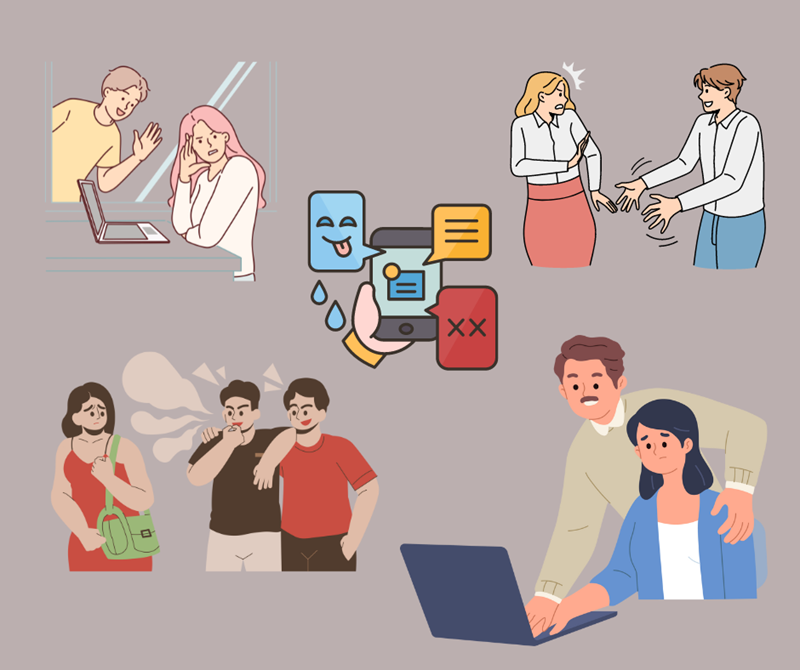
Social networks negatively affect mental health (Source: Pinterest)
Self-esteem and anxiety
Other people’s glamorous photos and “dream” lives make many young people start to ask questions: “Why can they do it but I can’t?” or “Am I good enough to be recognized?” Gradually, feelings of insecurity and self-esteem form, especially for those who are sensitive to public scrutiny. This makes them not only stressed with themselves but also worried about every action and word, afraid that they are not beautiful enough, good enough, special enough to be noticed and accepted.
Dependent on recognition from interactions
Social networks unintentionally make many young people equate their self-worth with the number of “likes”, comments and followers. When a post does not meet expectations, feelings of disappointment, frustration and self-doubt easily appear. In the long run, this dependence causes a loss of the ability to feel their true value outside the virtual world.
Worse, those virtual numbers gradually become a “measure” that young people unconsciously use to determine whether they are worthy of love and recognition. They easily fall into a state of comparing their interactions with others, thereby creating a pressured mentality to maintain a beautiful image, neat posts and trendy content to retain attention. When all recognition depends on feedback from the online community, young people begin to lose their inner confidence and sense of satisfaction with themselves. In the long term, this dependence is one of the causes of mental exhaustion, social insecurity and increased risk of psychological disorders in Gen Z (Emma et al., 2025).
Loneliness in a virtual crowd
Constant connection on social networks does not mean that young people feel understood. On the contrary, constantly following other people’s lives and having to maintain a positive image makes many young people gradually withdraw, avoiding real-life relationships. The more they interact online, the lonelier they feel in reality. No longer finding true sharing, Gen Z easily falls into a state of emotional isolation when there are many people around them but no one really accompanies them (Fassi et al., 2024). They gradually forget how to talk sincerely, are afraid to express their thoughts, and create distance from relationships that were once very close. Feeling lost