
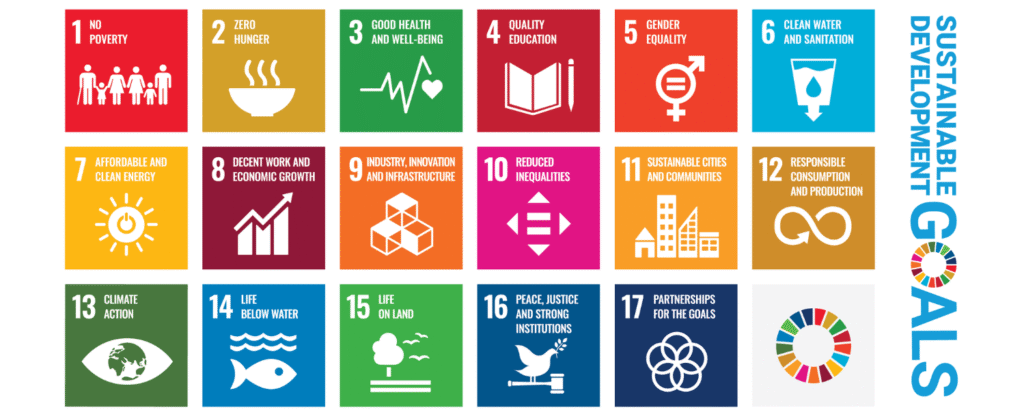
The 2024 Global Sustainable Development Conference, organized by Times Higher Education, took place in June in Thailand. The event brought together leading experts and organizations interested in and sharing new perspectives worth learning on the journey to implement the 17 United Nations Sustainable Development Goals (SDGs) by 2030.
5 sustainability crises of our time
At the beginning of the conference, urgent global issues continued to be raised, along with an urgent call for a community to act together.
Accordingly, we have been facing 5 “sustainability crises of our time” in the balanced relationship between economic and social development and environmental conservation, including: (1) sustainable food, land, water and oceans; (2) decarbonization in energy consumption and sustainable industry; (3) the development of sustainable cities and communities; (4) education, gender and inequality; (5) health, happiness and demographics.
In this context, many questions have been raised about the role of each individual, organization, country and continent in the process of working together to ensure a sustainable future.
“The process of recognizing the crises of sustainable development and making efforts to resolve them by linking national and organizational strategies to the 17 SDGs requires optimistic thinking and patience from leaders. This is not a dead-end journey of development” – Ms. Supamas Isarabhakdi – Minister of Higher Education, Science, Research and Innovation of Thailand emphasized in the Opening Session of the conference with the theme “Unifying higher education, government, industry and society for a sustainable future”.
Overview of the opening session of the conference
New approaches of universities in global sustainable development
Experts commented that higher education institutions have two important roles to support global sustainability. One is to mediate democratic, fair and cultural dialogues with stakeholders. Two is to educate sustainable knowledge, inspire, create a community with the same will, aiming to change the thinking and actions of generations who will master the future.
To carry out the above two roles, many discussions took place, contributing and drawing profound conclusions for higher education institutions and stakeholders in the process of joining hands to solve the five sustainability crises of the era.
One of the 60 discussion topics within the conference
* 5 key elements in the sustainable university model
The sustainable development model allows universities to understand and convert 17 SDGs into action, emphasizing 5 key elements: (1) an academic environment that encourages innovation, (2) knowledge co-production, (3) sustainable practices right on campus, (4) empowering the younger generation and (5) partnerships for progress. These elements contribute to the development orientation of Training, Research, Community Engagement, Campus Operations and Governance.
* Training and research innovation based on “co-creation”
In this model, “sustainable knowledge” becomes the connecting point for bilateral and multilateral stakeholders through the co-production/co-creation mechanism in which the university plays the role of intermediary. It can be between schools and learners, schools and researchers, researchers and the business community, schools and local authorities.
The output of this process is classes on sustainable development knowledge in general or in specific areas such as: climate change, biodiversity, gender equality, public health. In particular, the agenda on “green skills” for students and the young generation, for the first time, was set for schools and businesses at the conference. These are vocational skills that are trained in conjunction with the understanding of climate change, biodiversity, gender equality, and public health mentioned above.
* The responsibility to promote lifelong learning to build a sustainable workforce does not lie solely with schools
In a rapidly changing world, organizations must continuously “redesign” the purpose, content and methods of delivering education and training, with the goal of a sustainable workforce.
According to experts, the responsibility to promote lifelong learning does not lie solely with schools but also with businesses and employers. For schools, curricula need to be developed to equip learners with comprehensive skills and knowledge to lead and support sustainable development. For employers, professional development and capacity building activities need to be invested in to promote and develop skills related to sustainability, gender equality and social inclusion. Accordingly, business organizations need to change their perspective of “investing in the team” as an asset and lifelong learning ability as a sustainable factor to create value for the organization.
* Technology, artificial intelligence