
In the journey to conquer a new language, learners often face the pressure of having to memorize a large amount of vocabulary and complex grammar rules. This sometimes reduces motivation and turns learning into a stressful task instead of an experience of discovery. So how can we make learning English easier, more effective and connect more deeply with ourselves?
Overcoming anxiety to find a happy life during the pandemic
A post-“Dream” world
Summer playground to improve English communication skills at UEH
For many learners, maintaining interest and making English a natural part of life is a big challenge. Learning by traditional methods sometimes creates a gap between knowledge in books and practical application, causing anxiety when communicating. Therefore, the method of combining Mindfulness – the practice of focusing on the present moment in a non-judgmental way and connecting with personal interests (Hobbies) is emerging as an innovative solution. This combination not only helps reduce stress but also creates an interesting space for language practice, when joy comes from experience and self-discovery.
Understanding these concerns, the Student Care Department (DSA) in collaboration with the Faculty of Foreign Languages at the UEH English Park UEH English Zone organized a language seminar with the theme “English Through Mindfulness & Hobbies: Connect, Practice, Grow!”. The program was honored to have the participation of speaker Pau Rojas C, an expert from the Costa Rican Ministry of Public Education, who has extensive experience in applying innovative teaching methods.
Coming to the seminar, the speaker brought a fresh and inspiring perspective, helping attendees discover how to take advantage of the power of the mind and personal passion so that learning English is no longer a burden. The speaker shared that mindfulness helps us recognize and control anxiety, creating a more open and receptive mindset. When combining this with favorite activities such as drawing, listening to music, watching movies, we are creating an extremely meaningful and personalized English practice context.
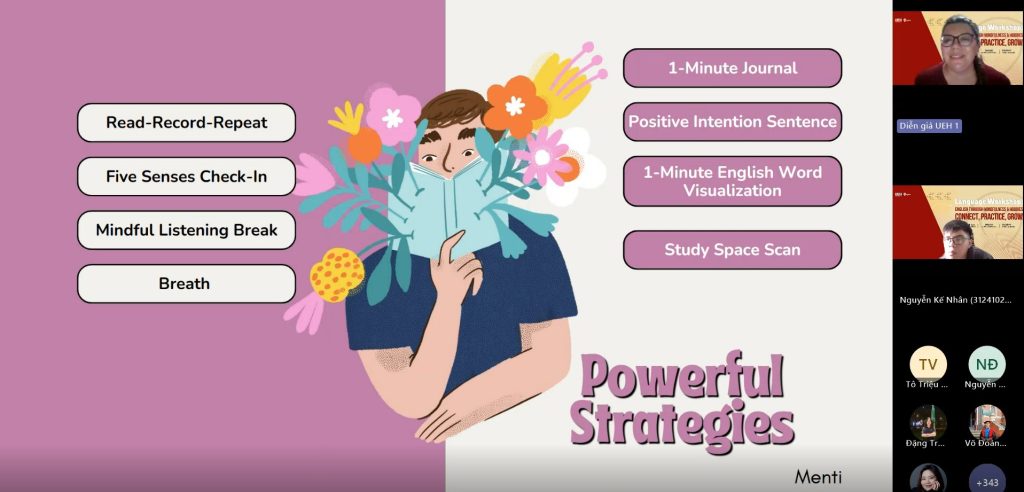
To turn theory into practice, learners are guided through specific steps: start a lesson with a few minutes of deep breathing to calm down, choose a topic related to their interests to write a short diary or discuss with friends. This method helps shift the focus from passive to active, thereby stimulating the natural use of vocabulary and sentence structures.
Speaker Pau Rojas C shared practical methods to incorporate mindfulness into learning English
At the same time, the speaker also pointed out the mistake that learners often make is focusing too much on perfection, fearing mistakes and forgetting the main goal of language is to communicate and connect. Practicing through hobbies helps to remove this psychological barrier. Instead of worrying about grammar, you will focus on expressing your passion. The speaker encouraged learners to see mistakes as an inevitable part of the learning process and celebrate small progress, such as learning a new word while reading an article about an idol, or listening to a song and discovering that the vocabulary used is very poetic and creative.
The workshop took place successfully in an open, interactive and positive energy atmosphere. During the 90 minutes, participants not only listened but also directly participated in mindfulness practice activities and lively group discussions about their hobbies. With a unique theme, the program clarified how to connect English with daily life, relieve anxiety and rekindle the joy of learning. The questions and concerns of the participants were all answered enthusiastically by the speakers, creating a valuable two-way learning space.