
The fashion industry is experiencing the beginning of a biotechnology revolution: using biomaterials to manufacture, increase product durability and reduce environmental impact. To better understand biomaterials and their significant impact on the fashion industry, let’s explore right away!
UEH students learn about Traditional Musical Instruments – Viet Du Nien Ky 2021
Implementing the Experimental Method Development Program at UEH from July 19 to August 12, 2022
Activities to improve manufacturing capacity to prepare for the Final Round of the UEH Branded Gift Set Design Competition
The fashion industry has been developing spectacularly with a predicted compound annual growth rate (CAGR) of 4.2% in the period 2025 to 2030. However, with the characteristics of the industry: short product life cycle, erratic consumer demand, diverse products and complex supply chains, the fashion industry has become the second most polluting industry in the world, after the oil industry. This industry accounts for about 8-10% of global carbon emissions due to the energy used in production, manufacturing and transportation. So how should consumers adjust their behavior in purchasing products in the fashion industry to help reduce the negative impact on the planet?
Choosing sustainable fashion
Examples of “sustainable fashion” (Source: JD School of Design)
“Sustainable fashion” is a broad concept that includes all efforts to minimize the negative environmental and social impacts of the fashion industry. This concept considers the entire life cycle of a garment product, starting from the exploitation of environmentally friendly raw materials; through ethical production stages; minimizing energy consumption during distribution, use and finally disposal when the product is no longer usable (Palm, 2023). Today, the trend of using fashion products produced by sustainable methods is a consumer solution to reduce the level of environmental pollution created by this industry.
One of the recent emerging trends in sustainable fashion production is the use of products made from biological materials or materials that are cultured/created from biology, in order to reduce dependence on animal skin and synthetic fibers. Bags made from leather fungus, clothes made from coffee grounds, fabrics made from pineapple leaves… are attracting the attention of green fashionistas.
Hermès Victoria handbag made from Sylvania mushroom mycelium. (Source: Coppi Barbieri)
When fashion is not just about “sewing” but also “cultivating”
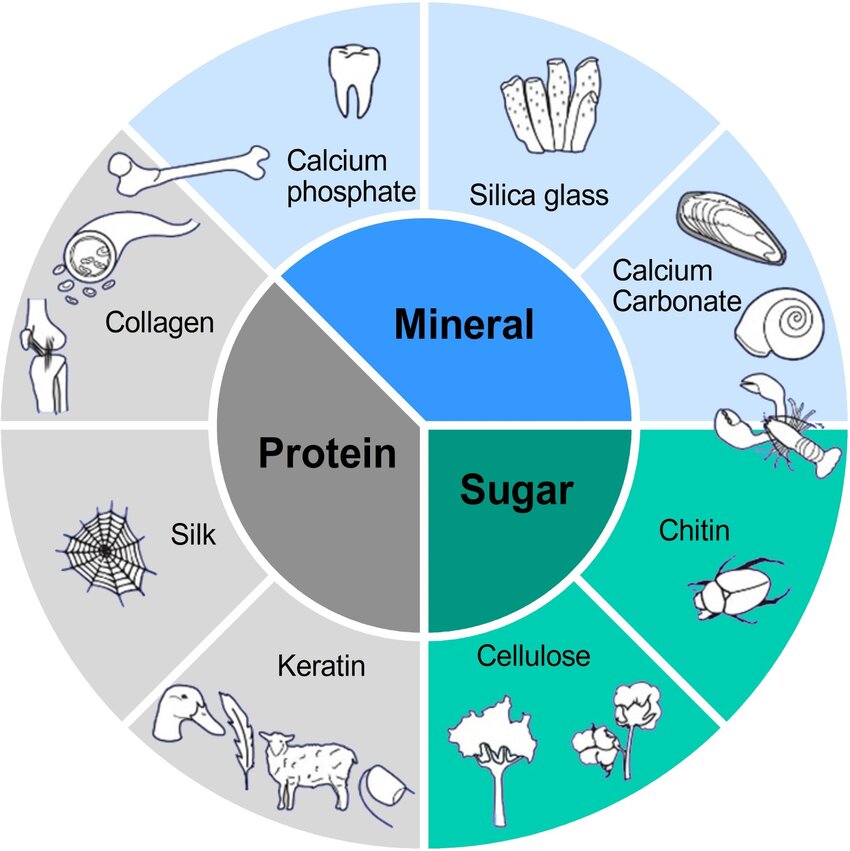
Composition of biomaterial production. (Source: Research Gate)
Biomaterials are defined as materials that are partly or entirely derived from biology (excluding fossil materials) and are biodegradable at the end of their life cycle. Some common biological materials are bio-fiber fabrics, banana fiber fabrics, bio-plastics, imitation leather materials from bacteria, etc. In particular, bio-fiber fabrics are very special because they can be actively “cultivated” by technology, made from living microorganisms (bacteria, live yeast, algae and mushroom root structures). Through the bio-engineering process, these microorganisms produce natural membranes to make fabric fibers. They are grown in molds to create fibers directly, reducing waste during the “harvesting” of fabric fibers. Manufacturers can actively implant DNA into the cells of organisms to control the characteristics of the fabric surface, fabric thickness and color of the finished fabric. Not produced by the same process as traditional fibers (growing, harvesting, and transporting from the fiber growing area to the manufacturing plant) means that bio-fibers do not use pesticides, fertilizers, toxic chemicals and gasoline. One recent example is that a research team has developed Nanocellulose, a lightweight material produced by bacteria on a fiber scaffold, to create a new sustainable biomaterial. Notably, Nanocellulose is 8 times stronger than steel due to its structure and small size, so when they stick together, they create strong bonds.